Waste Segregation &
Characterisation
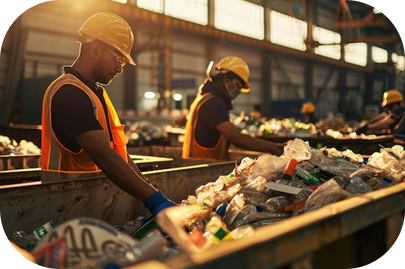
Waste segregation and characterisation form the backbone of sustainable waste management systems. By accurately identifying material composition, moisture levels, calorific value, and recyclability, we enable higher recovery rates, optimized processing, and regulatory compliance across municipal and industrial waste streams.
Waste streams analysed annually
Our teams analyse thousands of waste samples each year, delivering precise segregation data that supports recycling, RDF production, composting, and energy recovery initiatives.
Data-driven waste characterisation
We combine manual sorting, laboratory testing, and digital monitoring tools to generate reliable waste profiles, enabling informed technology selection and operational efficiency.
Aligned with environmental standards
Our characterisation methodologies align with CPCB, SPCB, and global best practices, ensuring projects meet environmental norms.