At Bhumi Green Energy, sustainability is not a compliance exercise — it is the intended outcome of every system we design. By transforming waste into resources, restoring degraded land, and enabling circular economies, we deliver measurable environmental and climate benefits at scale.
Our sustainability framework is grounded in scientific validation, transparent monitoring, and globally aligned metrics. This ensures policymakers, institutions, and communities clearly understand the long-term impact and accountability behind every project we deliver.

Bhumi Green Energy’s projects directly reduce greenhouse gas emissions by preventing methane release, recovering recyclable materials, generating renewable energy, and eliminating open dumping and landfilling practices.
Our solutions enable municipalities, industries, and institutions to:
Emission Reduction Pathways Include:
We collaborate with recognized carbon standards, auditors, and verification agencies to ensure credibility, transparency, and measurable climate impact.
Bhumi Green Energy supports Environmental, Social, and Governance (ESG) frameworks by delivering transparent, data-backed evidence of sustainability outcomes across waste, energy, and land restoration projects.
Our engineering interventions contribute meaningfully to:
Bhumi Green Energy’s engineering, operations, and sustainability outcomes are closely aligned with the United Nations Sustainable Development Goals (SDGs). Each project is designed to deliver measurable contributions across environmental protection, public health, resource efficiency, and climate resilience.
Prevention of leachate contamination, protection of groundwater systems, and improved sanitation outcomes through scientific waste processing and elimination of open dumping practices.
Generation of renewable energy through waste-to-energy systems, including RDF and biogas, contributing to reduced fossil fuel dependence and enhanced energy security.
Support for municipalities in developing cleaner, safer, and more resilient urban environments through decentralized waste management, landfill diversion, and improved public health conditions.
Promotion of circular economy principles by maximizing material recovery, reducing waste generation, and converting waste streams into usable resources with minimal residual disposal.
Direct reduction of greenhouse gas emissions through methane avoidance, renewable energy generation, and long-term carbon sequestration via soil restoration and biological treatment processes.
Restoration of degraded land and ecosystems through legacy waste remediation, bioremediation, and sustainable land reuse, supporting biodiversity and long-term environmental stability.
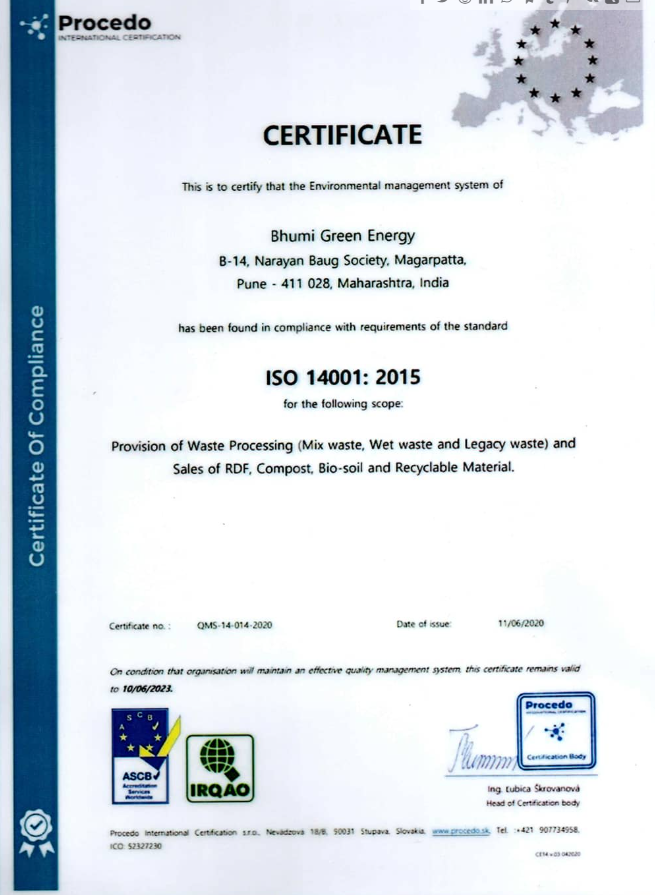
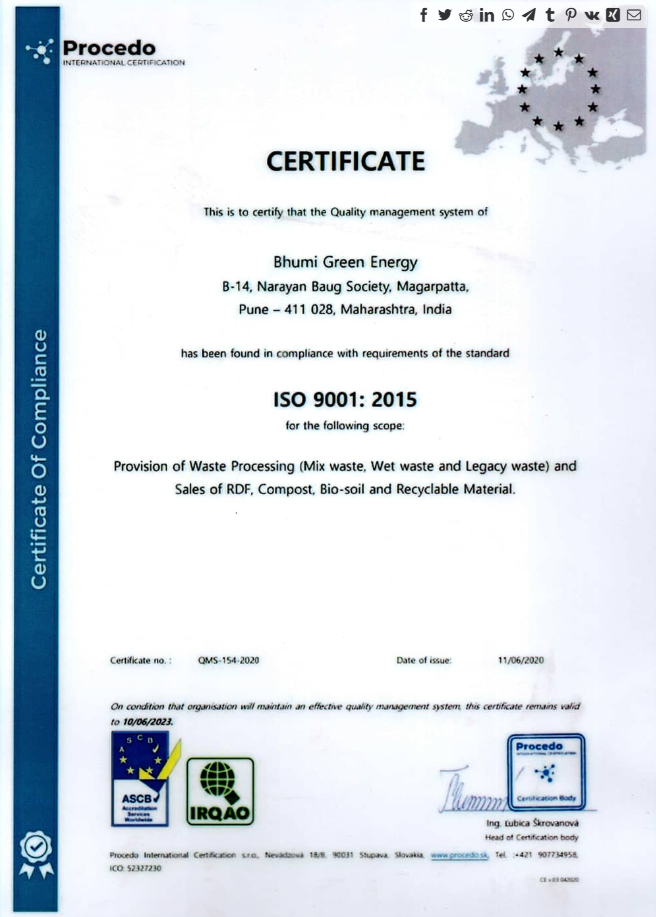
Our SDG alignment is supported by data-driven monitoring, third-party audits, and compliance frameworks to ensure transparency, accountability, and verifiable sustainability outcomes.
Sustainability at Bhumi is not a report, a metric, or a compliance checklist — it is a planetary commitment embedded in our engineering, our research, and our collaborations.
Every site we restore, every waste stream we respect, and every ecosystem we regenerate contributes to a more resilient world.